
Skin Tag Removal in Seoul: Quick, Precise CO2 Laser Removal by a Dermatologist
Small, soft skin tags on the neck, eyelids, underarms or body can be removed in minutes with a CO2 laser or fine surgical snip — after a dermatologist confirms they are harmless.
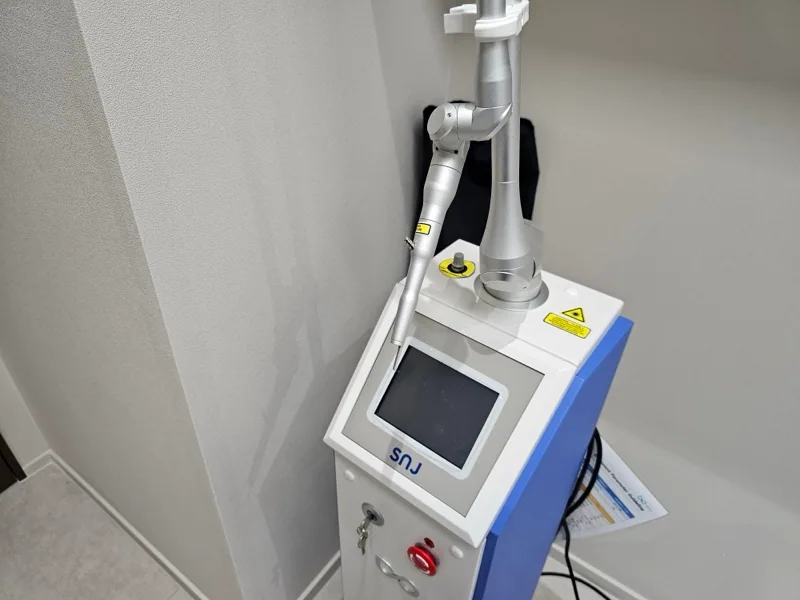
How are skin tags removed?
Skin tags (acrochordons) are usually removed with a CO2 laser, radiofrequency device or a quick snip under local anaesthetic, taking only a few minutes and leaving a small scab that heals in about a week. A dermatologist checks each lesion first so that anything unusual is examined rather than simply removed.
Where we treat
Where do skin tags appear?
Skin tags form where skin rubs on skin and are more common with age, weight gain, pregnancy and insulin resistance.
Neck and collar
The most common site; many tags can be removed in one visit.
Eyelids
Delicate areas treated with fine settings and eye protection.
Underarms and groin
Friction areas where tags catch on clothing.
Body and chest
Single or multiple tags removed in one session.
Raised moles
Need examination first; see mole checks.
Other growths
Seborrhoeic keratoses and lesions via lesion removal.
How it works
How CO2 laser removal works
After numbing, the laser vaporises the tag at its base while sealing small vessels, so there is little bleeding. A tiny scab forms and falls off as new skin heals underneath.
- Day 0: tag removed, small pink spot
- Days 1–7: scab forms; keep moist and covered
- Weeks 1–4: pinkness fades
- Prevention: new tags may form over time
Pricing
How much does skin tag removal cost in Korea?
Price depends on size and number.
| Treatment | Typical price range (KRW) |
|---|---|
| CO2 skin tag removal (face, neck, body) | ₩30,000 – ₩100,000 per lesion |
Guide ranges only. Your plan and quote are confirmed after an in‑person assessment.
What to expect
Your skin tag removal, step by step
-
Examination
Dr. Yun confirms each growth is a benign skin tag, using dermoscopy when needed.
-
Numbing
Topical cream or a tiny local anaesthetic injection.
-
Removal
CO2 laser or snip; a few minutes for several tags.
-
Aftercare
Antibiotic ointment and a dressing until the scab falls off.
Who is a good candidate?
- Adults with harmless skin tags that rub or catch
- People wanting quick removal with minimal marks
- Visitors who can keep the area clean for a week
- Those with several tags to remove at once
When to get it checked
- Bleeding, rapid growth or colour change needs examination first
- Pigmented or irregular growths should not be lasered without diagnosis
- Darker skin can develop temporary pigmentation; sun protection helps
- Diabetes or poor healing may need extra aftercare
Suspicious lesions are sent for pathology rather than destroyed.

Your dermatologist
Dr. SangYoul Yun
Chief Director · Korean Board‑Certified Dermatologist · AAD International Fellow (IFAAD)
Dr. Yun examines every lesion before removal and chooses laser or excision so that healing is quick and marks are minimal. Consultations are available in English.
Delight Dermatology Clinic · Registered foreign‑patient medical institution (KHIDI M‑2024‑01‑08‑8248) · 4F, Building B, 509 Gangnam‑daero, Seocho‑gu, Seoul · +82 2‑517‑9991 · About our clinic
FAQ
Skin Tag Removal: frequently asked questions
Does skin tag removal hurt?
Only a brief sting from numbing; the removal itself is painless.
Will it leave a scar?
Usually just a small pink spot that fades over weeks; scarring is uncommon.
How much does it cost in Seoul?
Typically ₩30,000–₩100,000 per lesion depending on size.
Can I have it done on a short trip?
Yes. Keep the area clean and avoid swimming for about a week.
Can skin tags come back?
The treated tag will not, but new ones can develop over time.
Are skin tags dangerous?
No, but anything that bleeds, changes or grows should be checked; see skin cancer screening.
Book your skin tag removal in Gangnam
Send a photo for an initial opinion and an English‑speaking appointment.