
Melasma Treatment in Seoul: A Dermatologist‑Led, Low‑Irritation Plan
Melasma is chronic and easily triggered, so stronger lasers often make it worse. At Delight Dermatology Clinic in Gangnam we combine strict sun protection, prescription topicals, screened oral tranexamic acid and ultra‑low‑energy laser toning for gradual, lasting fading.
What is the best treatment for melasma?
There is no one‑session cure for melasma; the most reliable results come from a combined, step‑by‑step plan. Daily SPF 50+ and prescription topicals (hydroquinone 2–4% for a short course, or azelaic acid 15–20%) come first, oral tranexamic acid is added after safety screening, and only then is ultra‑low‑fluence 1064 nm Q‑switched Nd:YAG toning layered on. Visible improvement usually appears at 3–6 months, followed by maintenance.
Diagnosis first
Is it melasma — or another pigment?
Melasma appears as symmetrical brown or grey‑brown patches on the cheeks, forehead, upper lip and chin, and is driven by UV and visible light, hormones (pregnancy, the contraceptive pill) and skin irritation. Because several conditions look similar but need different treatment, Dr. Yun maps your pigment with a Wood's lamp and dermoscopy before anything is prescribed.
Melasma
Hormone‑ and light‑sensitive, recurs easily. Needs gentle, long‑term control — this page.
Sun spots & freckles
Well‑defined spots that respond to targeted laser. See brown spot treatment.
Post‑inflammatory pigment
Marks left after acne or irritation. See acne scar treatment.
Hori's nevus
Deeper blue‑grey spots, often mistaken for melasma; treated with a different laser approach.
Mixed pigmentation
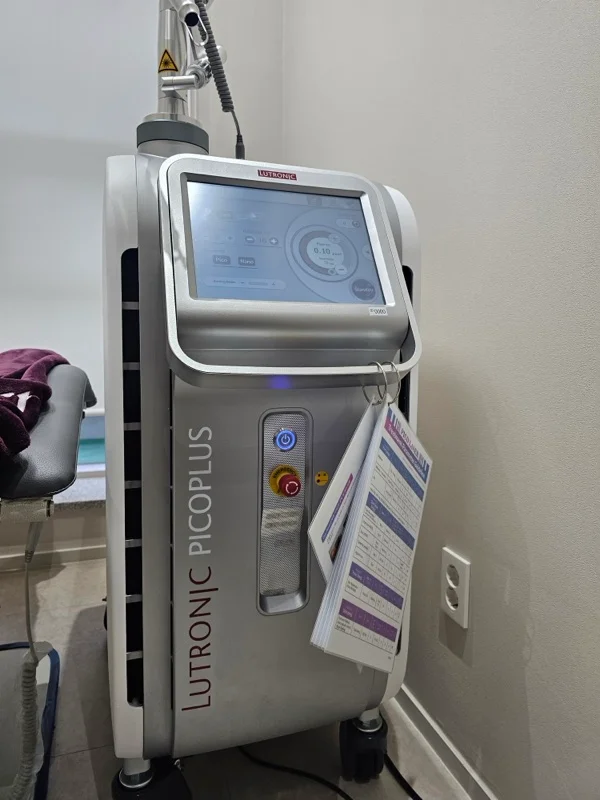
Melasma plus spots — a staged plan with pico toning or laser toning.
General discoloration
Uneven tone and dullness. Start with our pigmentation treatment overview.
Results timeline
What to expect month by month
- Weeks 1–2: no visible change yet; sun‑protection habits and tolerance to medication are checked
- Weeks 4–6: subtle evening of tone in photos
- Weeks 8–12: laser toning begins; skin looks gradually smoother and more even
- Months 3–6: visible reduction on standardised mMASI photo comparison
- 6 months +: topicals continue, oral medication is tapered, maintenance toning every 4–8 weeks


How we treat it
Our step‑by‑step melasma protocol
-
Mapping
Consultation with Dr. Yun, Wood's lamp and dermoscopy to confirm melasma and rule out look‑alikes.
-
Topicals
Hydroquinone 2–4% (limited to 6–8 weeks) or azelaic acid 15–20%, plus tinted SPF 50+ every day.
-
Oral TXA
Tranexamic acid 250 mg twice daily for 3–6 months — only after a written clot‑risk screening and consent.
-
Laser toning
After 6–8 weeks: weekly ultra‑low‑fluence Q‑switched 1064 nm toning (Lutronic Spectra XT), 5–10 sessions.
Laser is never used alone for melasma at our clinic — it is added on top of a base treatment that is already working, and cumulative energy is tracked every session.
Pricing
How much does melasma treatment cost in Korea?
Most patients combine several treatments over 3–6 months. Typical Seoul price ranges per item:
| Treatment | Typical price range (KRW) |
|---|---|
| Laser toning or pico toning(per session) | ₩100,000 – ₩300,000 |
| Brightening chemical peel | ₩80,000 – ₩200,000 |
| Exosome / Rejuran skin booster add‑on | ₩200,000 – ₩400,000 |
| Brightening injection / IV therapy | ₩100,000 – ₩250,000 |
| Prescription creams (hydroquinone, azelaic acid, etc.) | ₩50,000 – ₩100,000 |
Guide ranges only. Your plan and quote are confirmed after an in‑person assessment.
Aftercare that protects your results
- Tinted broad‑spectrum SPF 50+, reapplied every 2–3 hours outdoors
- Wide‑brimmed hat; remember UVA through car windows
- For 0–3 days after toning: moisturise 2–3×/day, avoid sauna, hot showers and heavy sweating
- No retinoids or strong actives for 5–7 days after each session
Safety & who should wait
- Oral tranexamic acid is not given with a history of blood clots, retinal vascular occlusion or seizures, or to smokers over 35 on combined hormonal contraception
- Medication is paused during pregnancy and breastfeeding, and one week before planned surgery
- Hydroquinone is limited to short courses to avoid ochronosis
- Aggressive lasers and peels can trigger rebound — avoid "one‑shot" promises
Melasma commonly recurs (about one in four to one in three patients even after successful treatment), so maintenance is part of the plan.

Your dermatologist
Dr. SangYoul Yun
Chief Director · Korean Board‑Certified Dermatologist · AAD International Fellow (IFAAD)
Dr. Yun personally diagnoses and plans every melasma case. At our clinic, injections and energy‑based devices are always performed by the physician — never delegated to nurses or technicians. Consultations are available in English.
Delight Dermatology Clinic · Registered foreign‑patient medical institution (KHIDI M‑2024‑01‑08‑8248) · 4F, Building B, 509 Gangnam‑daero, Seocho‑gu, Seoul · +82 2‑517‑9991 · About our clinic
FAQ
Melasma treatment: frequently asked questions
Can melasma be cured permanently?
Melasma can be greatly reduced and kept under control, but it is a chronic condition that can return with sun exposure, hormones or irritation. A maintenance plan with sun protection, topicals and occasional toning keeps results stable.
Is laser safe for melasma?
Yes, when used gently. We use ultra‑low‑energy Q‑switched 1064 nm toning only after a base of topical and oral treatment is working. High‑energy lasers can worsen melasma, which is why settings and cumulative dose are tracked every session.
How many sessions will I need?
Typically 6–8 weeks of topical and oral treatment, then 5–10 weekly toning sessions, followed by maintenance every 4–8 weeks. Visible change is usually seen at 3–6 months.
Can I start melasma treatment on a short trip to Seoul?
Yes. We can diagnose, prescribe and plan in one visit, and give you a home‑care routine to continue. For higher‑risk patients, oral tranexamic acid is not started the same day and requires written screening first.
Does the pill or pregnancy affect melasma?
Yes. Hormonal changes are common triggers. We review contraception and, where helpful, thyroid function as part of your plan; medication is paused during pregnancy and breastfeeding.
Is pico toning better than laser toning for melasma?
Both can help. Pico toning uses shorter pulses with less heat and may suit mixed or stubborn pigment, while Q‑switched laser toning is a well‑established gentle option. Your dermatologist chooses based on your pigment type and skin sensitivity.